Attachments & Operation
CAT 313 GC Dozer Blade Retrofit: Custom Excavator Solutions
A workshop photo case showing how a CAT 313 GC dozer blade retrofit brings together mounting fabrication, a center swivel joint, hydraulic control components, wiring and operator controls.
Applicable scope
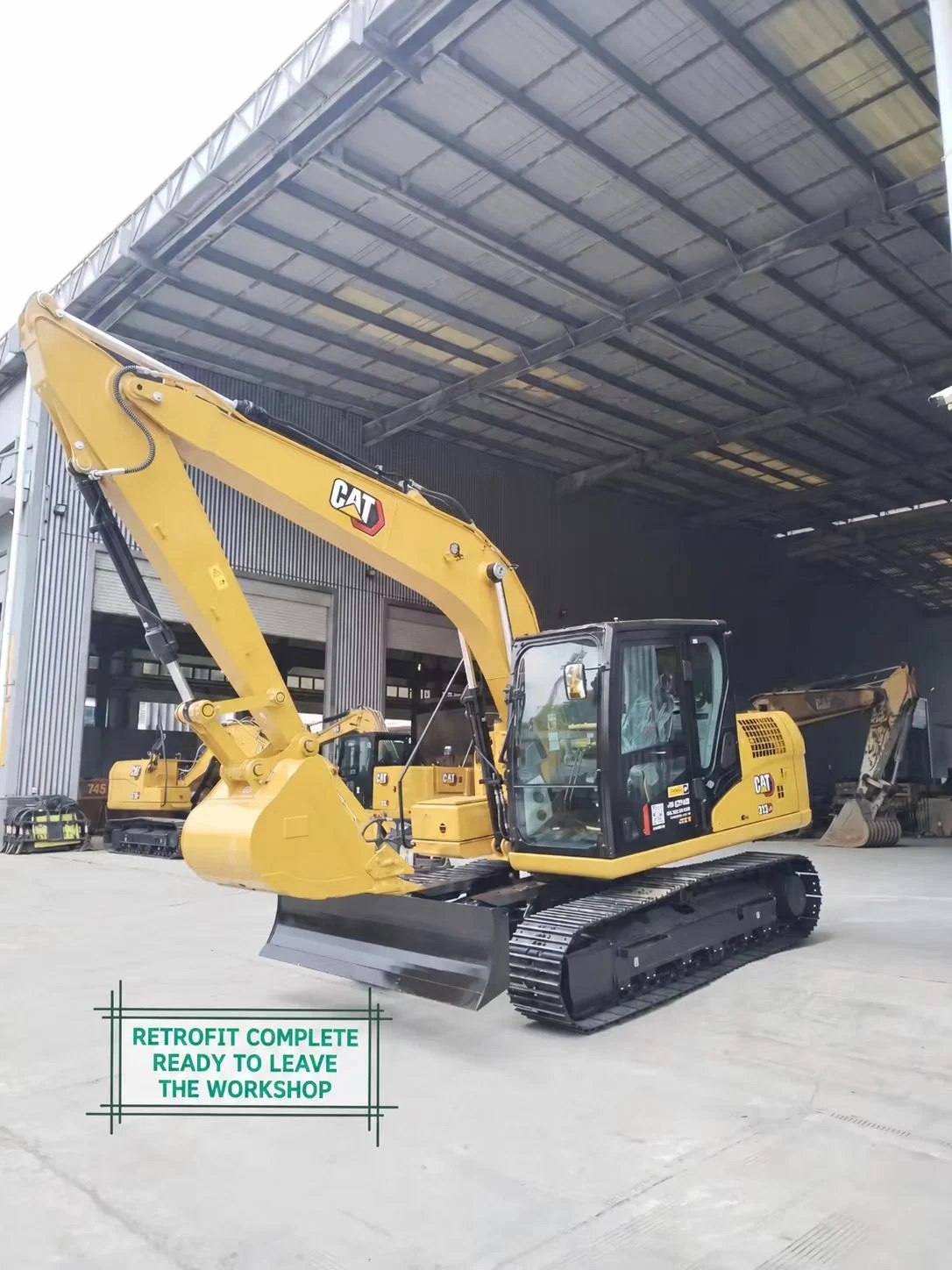
Workshop photo case of a CAT 313 GC dozer blade retrofit. Describes the documented mounting, hydraulic and control work. Compatibility for another machine requires its serial number and configuration. Dimensions, pressure, flow, price, duration, approvals and acceptance results are not established by this photo record.
A contractor looking for a CAT 313 GC with a dozer blade needs to know more than whether a blade can be fitted. The important questions are whether the mounting structure, hydraulic supply and operator controls can be matched to the exact machine and the intended work.
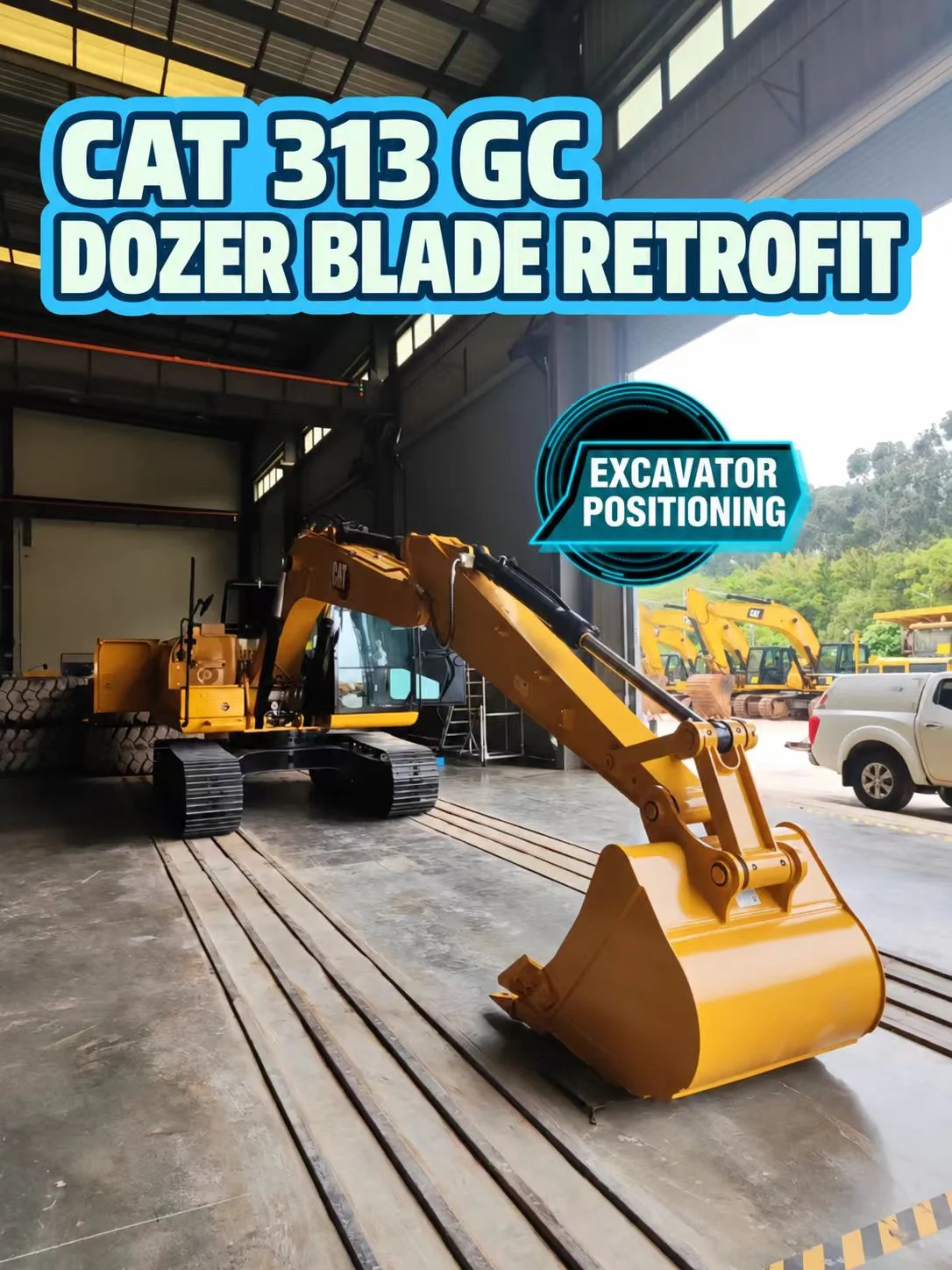
This workshop case presents Global Machine Trader’s customer customization capability through a CAT 313 GC dozer blade retrofit. The project photographs document blade fabrication and fitting, mounting-bracket work, a center swivel joint replacement, valve-block installation, control wiring and cab preparation.
For a buyer comparing excavator customization suppliers, the value is in seeing how those parts of the job connect. The finished appearance matters, and the less visible hydraulic and control work deserves equal attention.
Can a Dozer Blade Be Added to a CAT 313 GC?
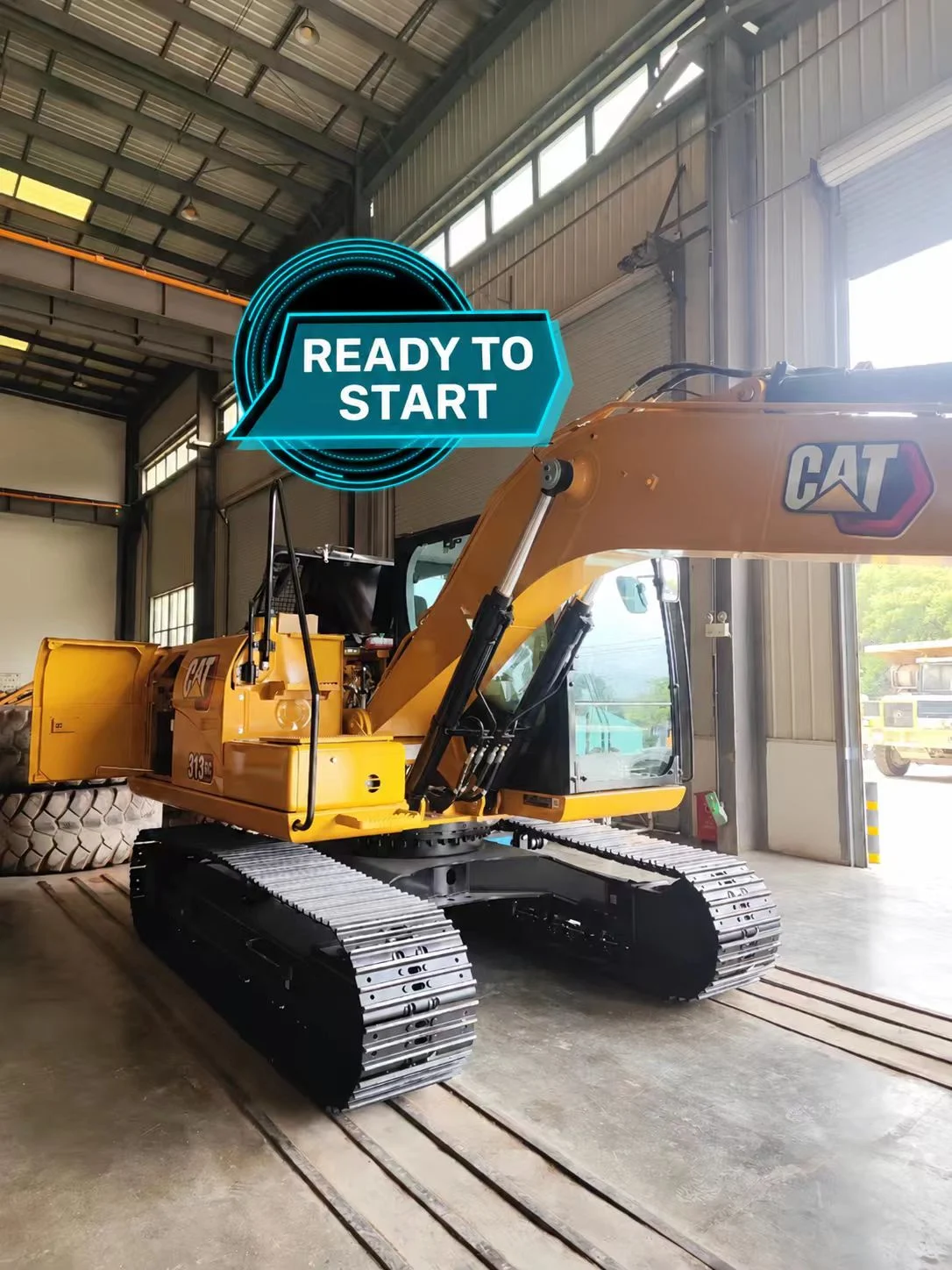
The supplied photographs show a blade fitted to a machine carrying CAT 313 GC markings. They provide a concrete retrofit example. A proposal for another excavator still needs to match that unit’s serial number, undercarriage, existing hydraulic equipment and intended application.
Caterpillar lists blade options for certain current 313 GC configurations and notes that equipment varies. That model information does not establish the width or specification of the custom blade pictured here. Likewise, Caterpillar explains that its hydraulic kits are selected by serial-number prefix and machine configuration. These are useful reasons to assess the actual machine before quoting a retrofit.
An excavator owner may consider a blade for backfilling, moving loose material or site finishing. The proposed task, material and duty should define the scope; this case does not establish a universal suitability rating for those applications.
What Does This Customization Project Include?
| System | Work shown in the photographs | Why it matters to the buyer |
|---|---|---|
| Blade assembly | Blade, pivot arms and two hydraulic cylinders | Defines the attachment being fitted |
| Mounting structure | Bracket fit-up, welding and installed mounts | Connects the blade assembly to the lower frame |
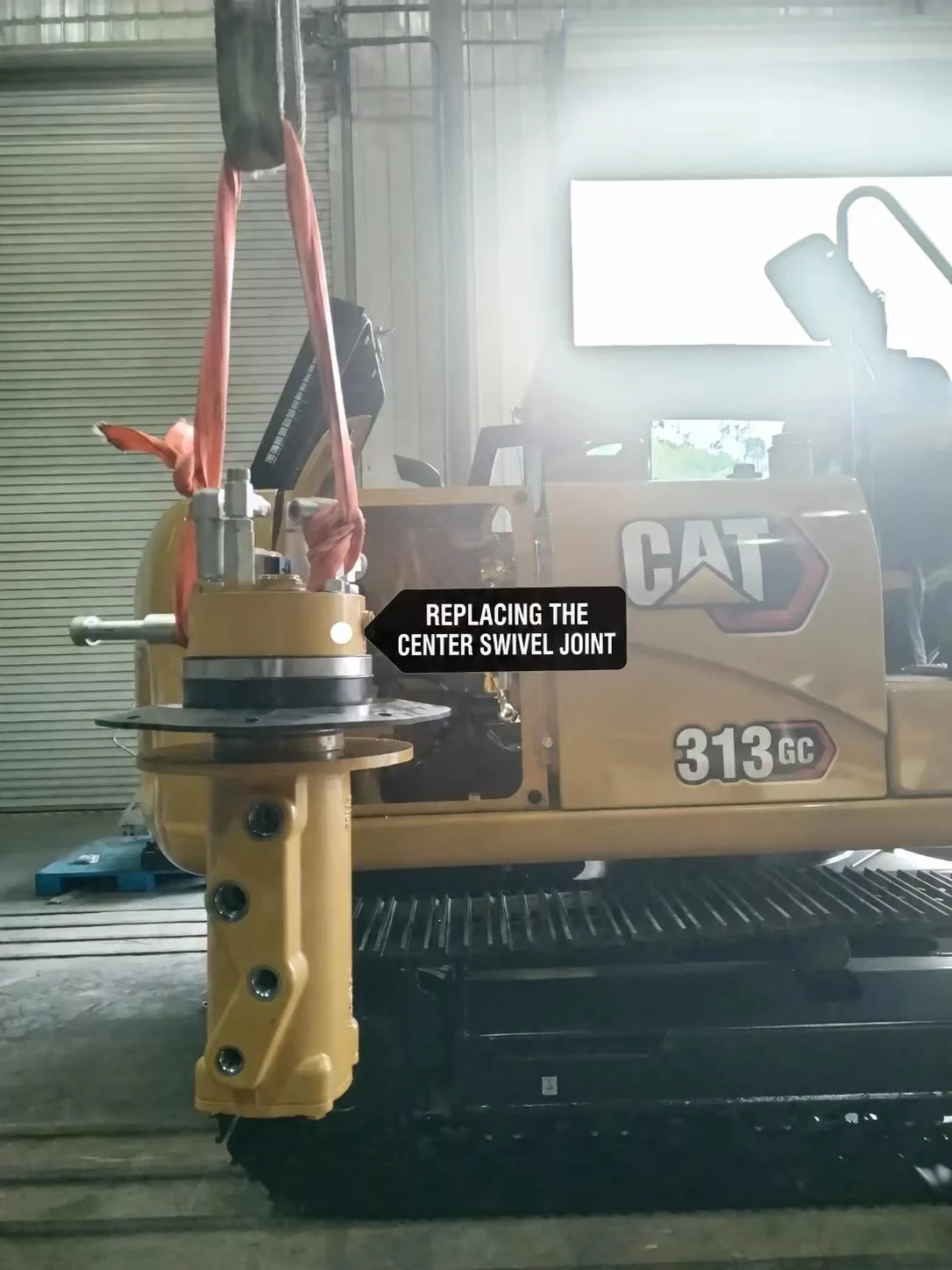
| Hydraulic transfer | Original/retrofit center swivel comparison and fitted connections | Shows the hydraulic interface between upper and lower structures being addressed |
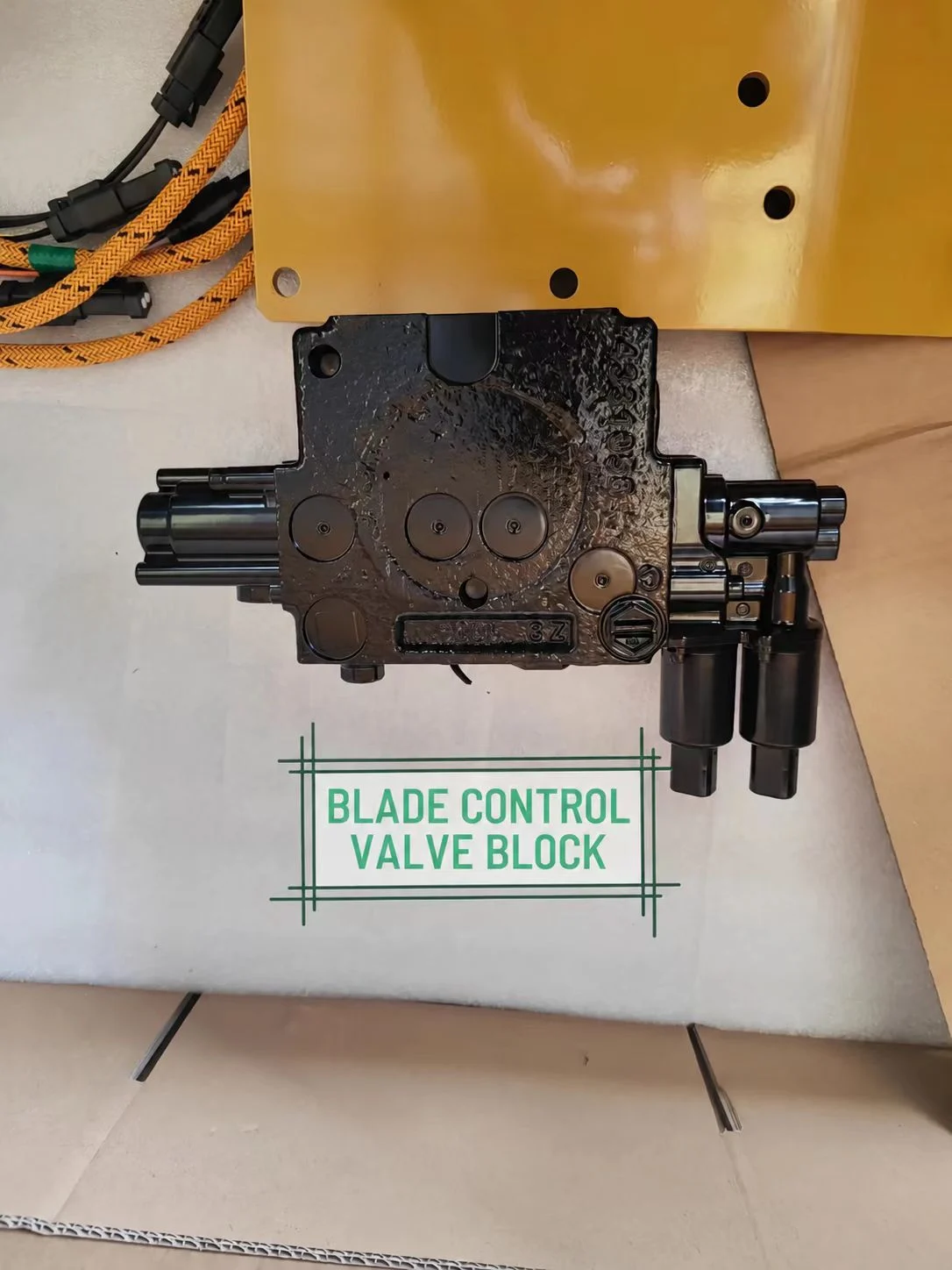
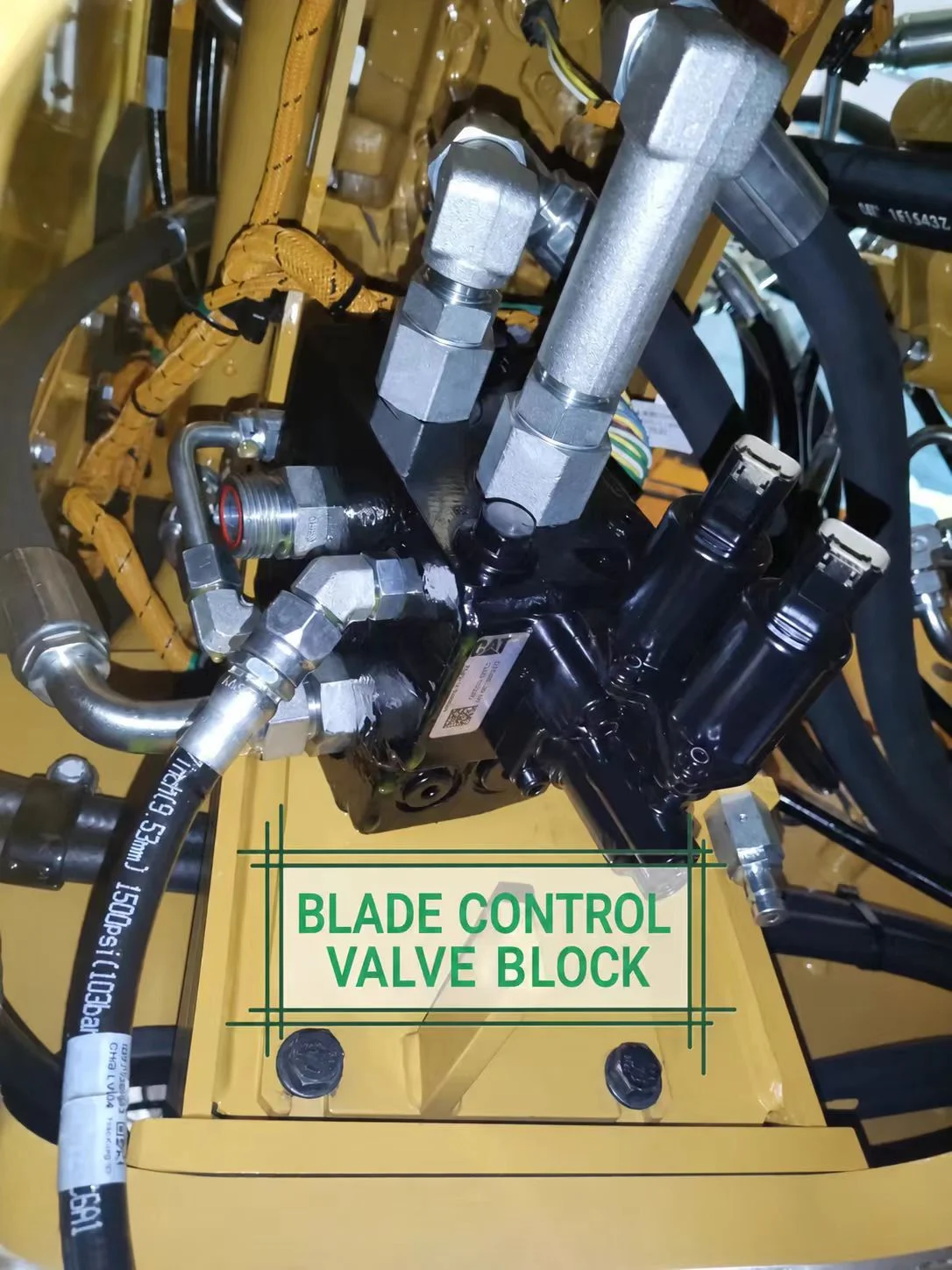
| Valve and hoses | Blade control valve block, fittings and connected lines | Shows the control circuit hardware |
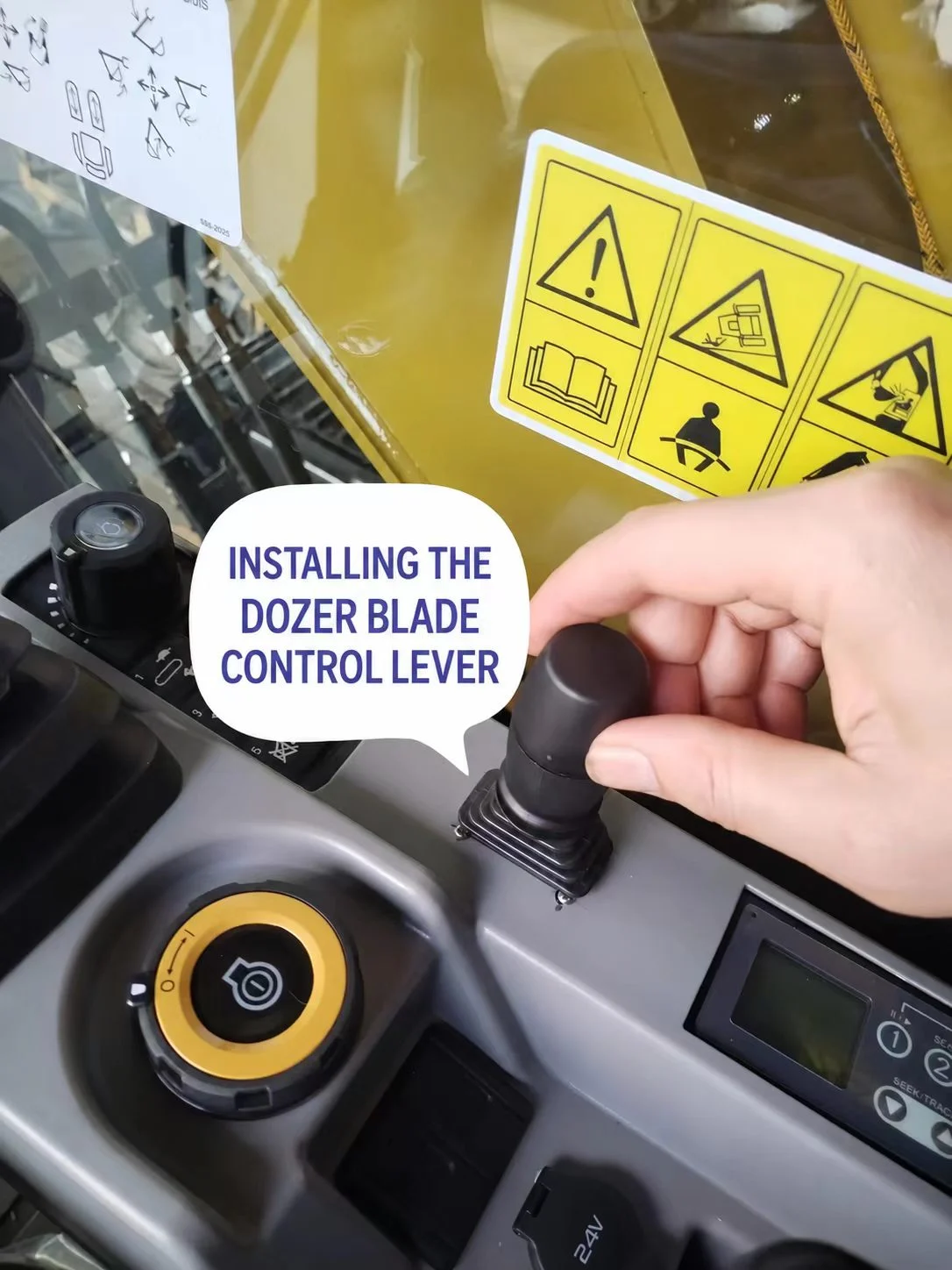
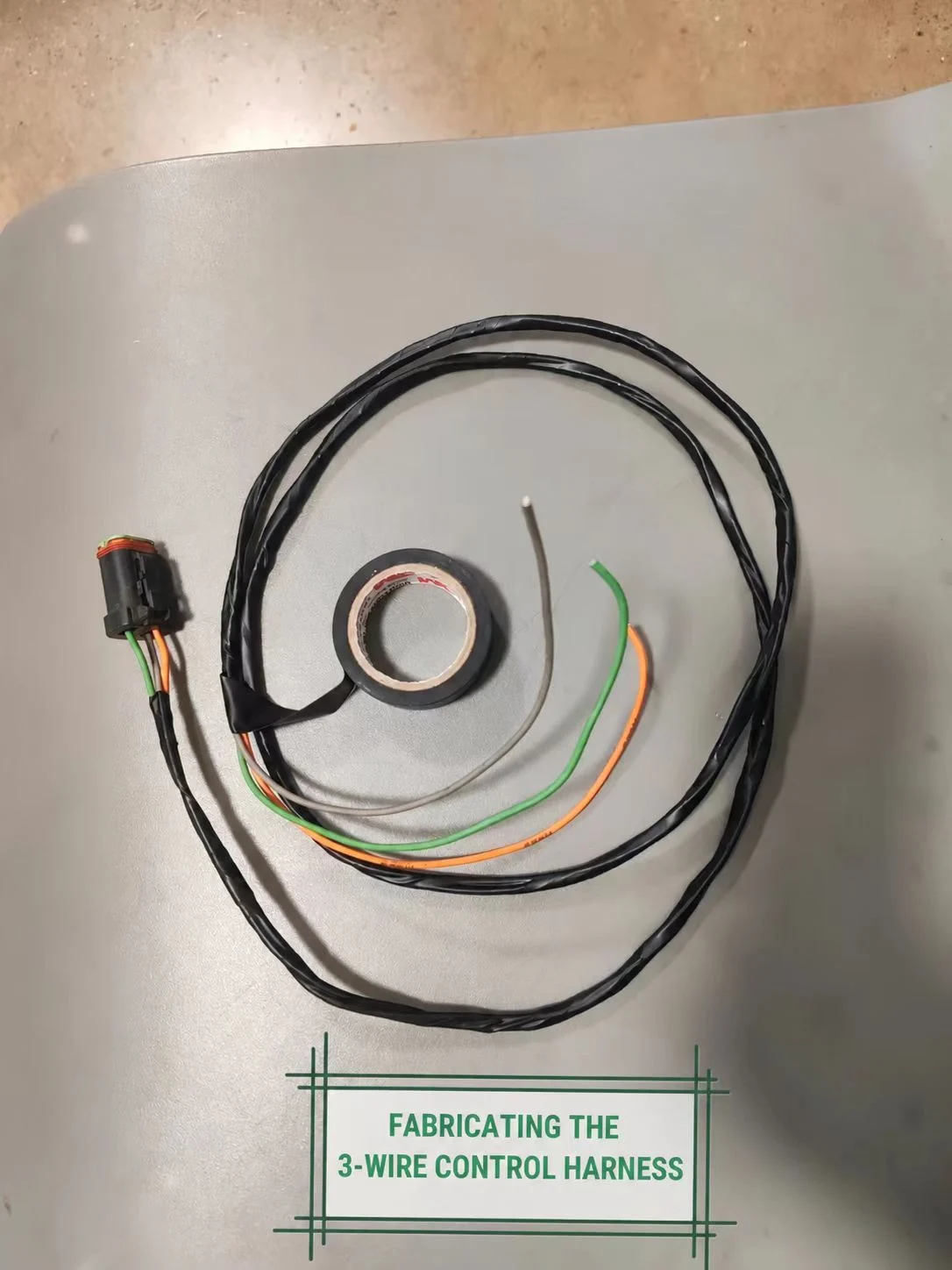
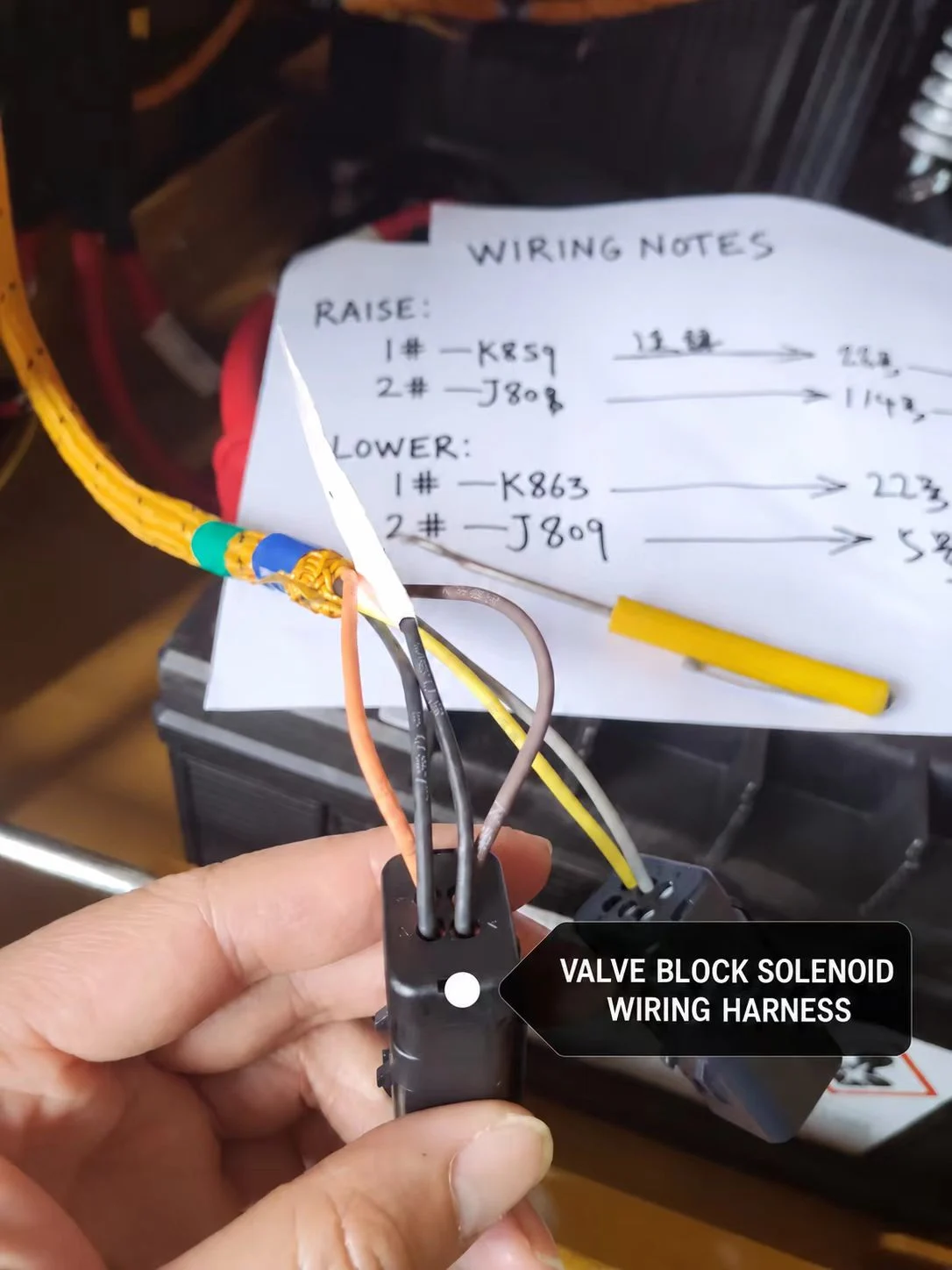
| Electrical and cab controls | Three-wire harness, solenoid connections, control lever and monitor setup | Documents operator-control integration |
| Workshop preparation | Blade finishing, filtered oil-transfer equipment and cab cleaning | Records preparation beyond the visible attachment |
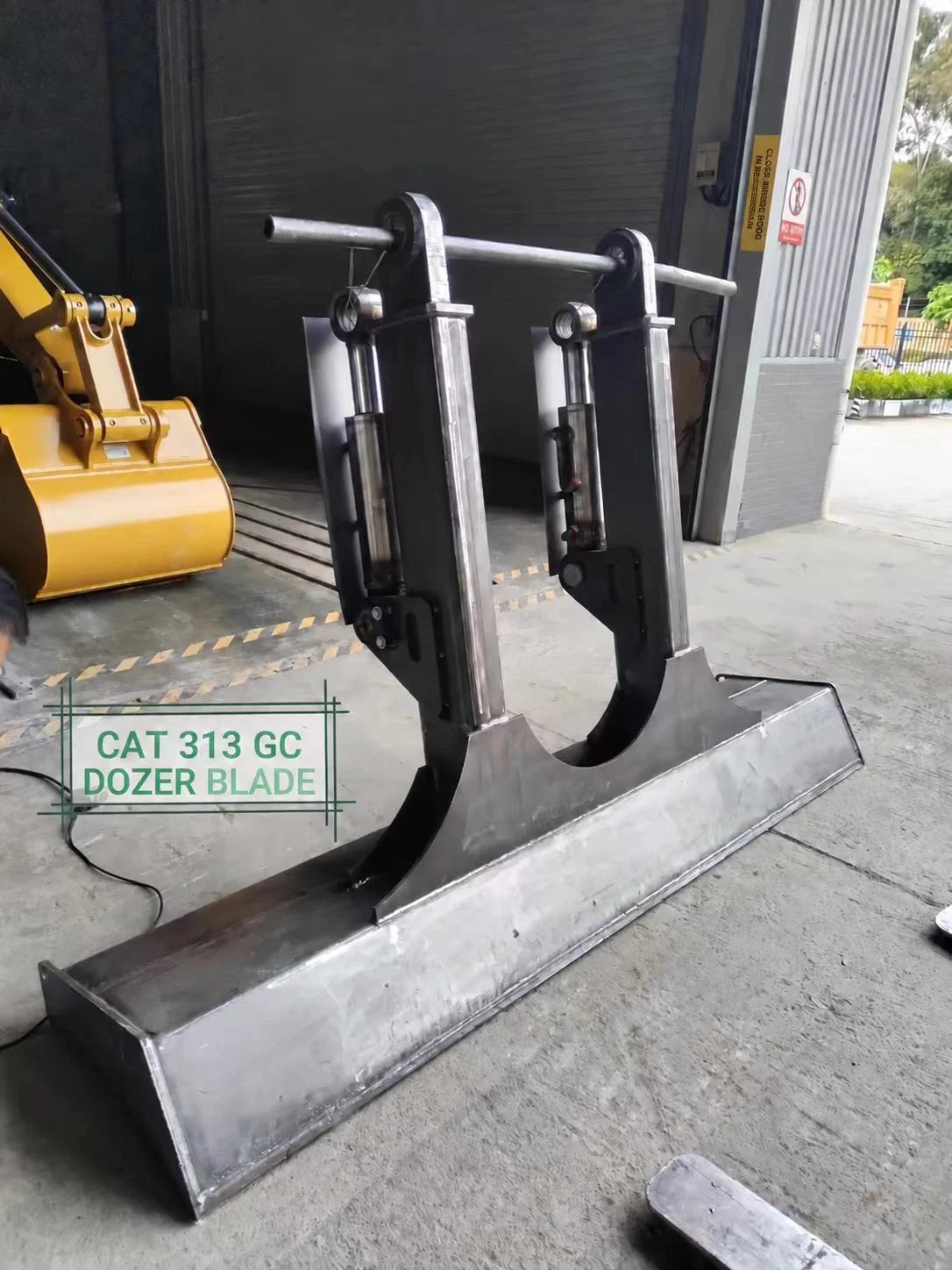
The visible blade uses a two-cylinder arrangement, and the control work includes a photographed three-wire harness. A quotation for another machine should specify the actual blade dimensions, component requirements and installation scope.
Blade Fabrication and Mounting: Building Around the Machine
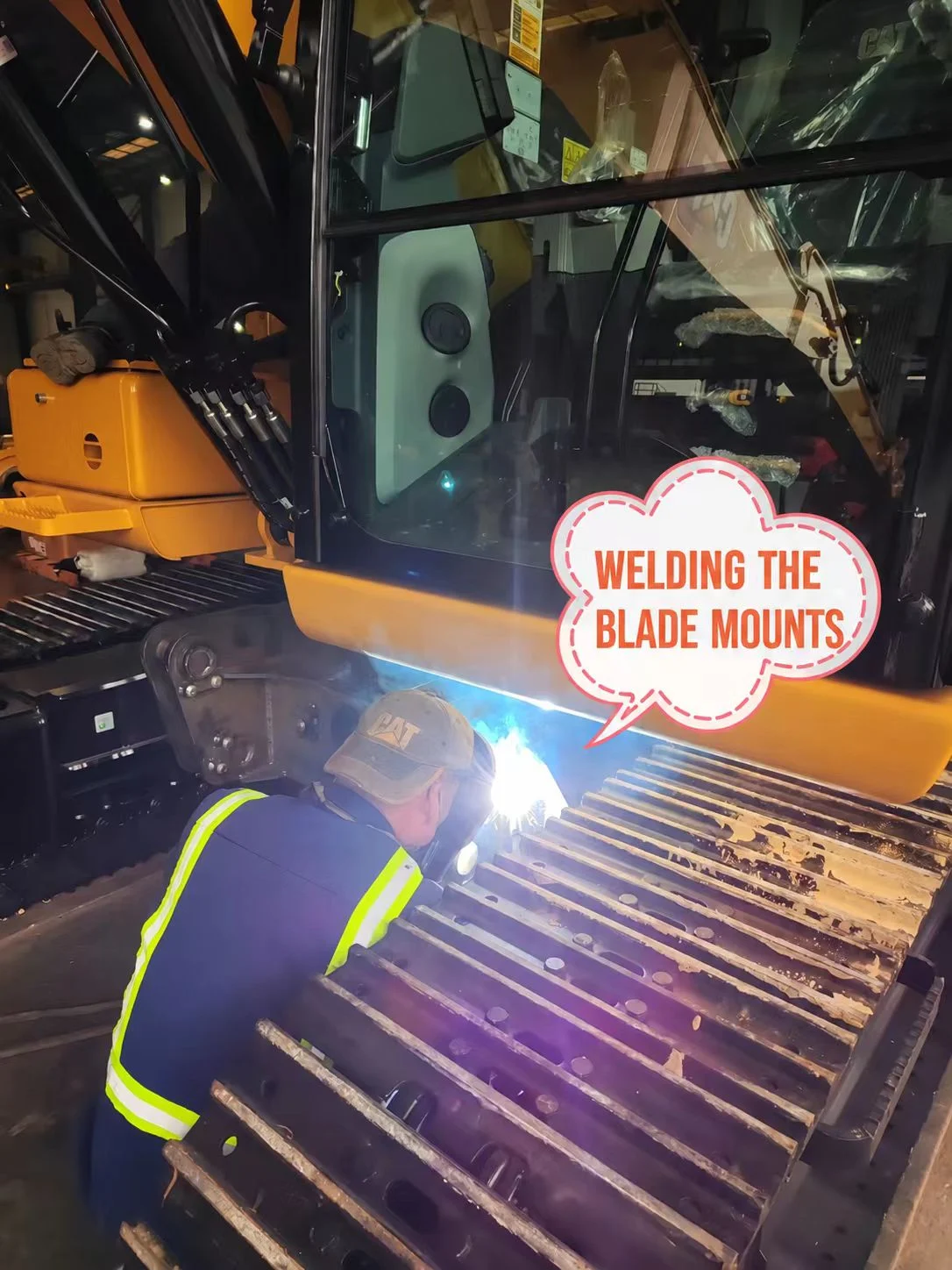
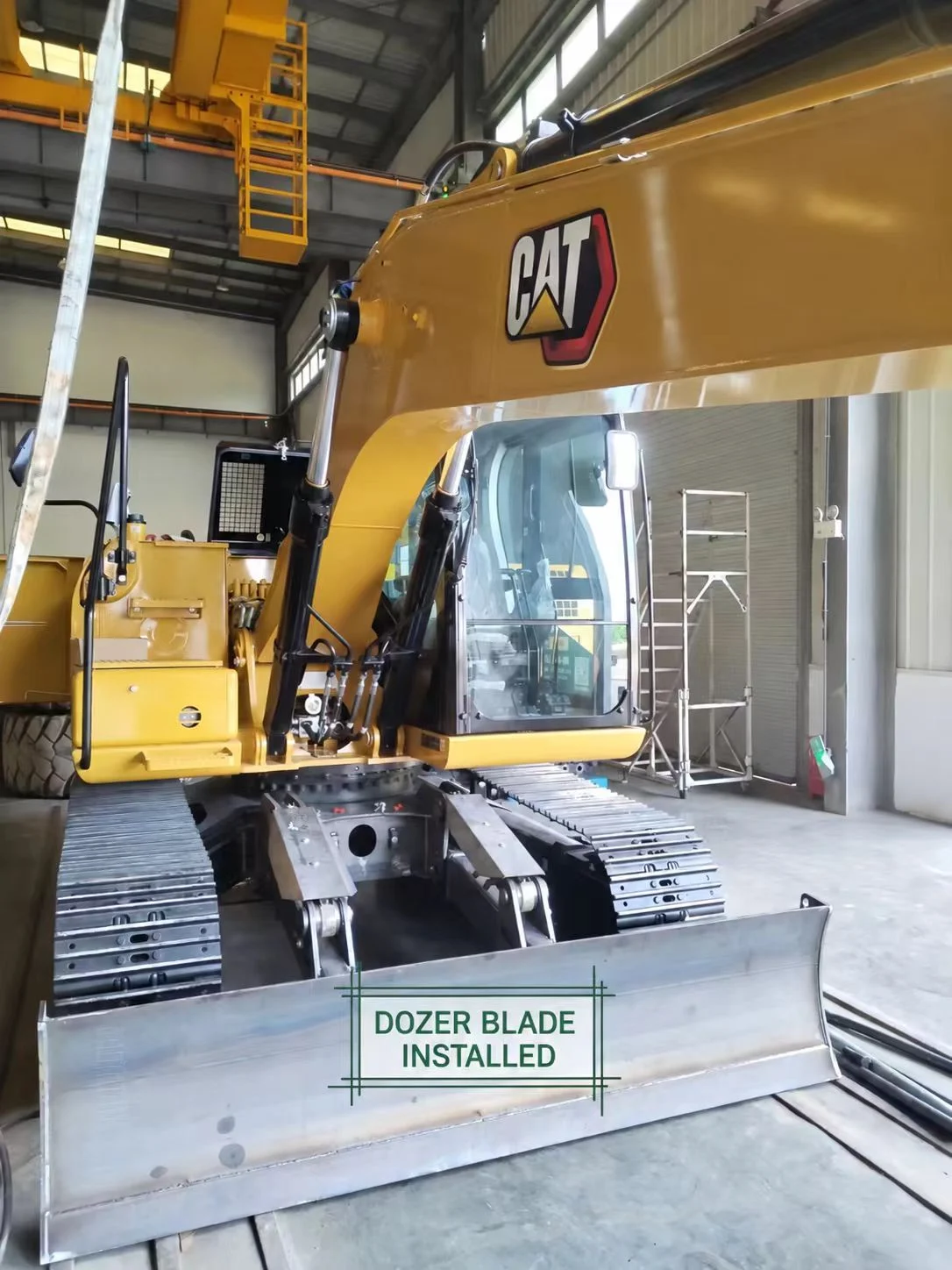
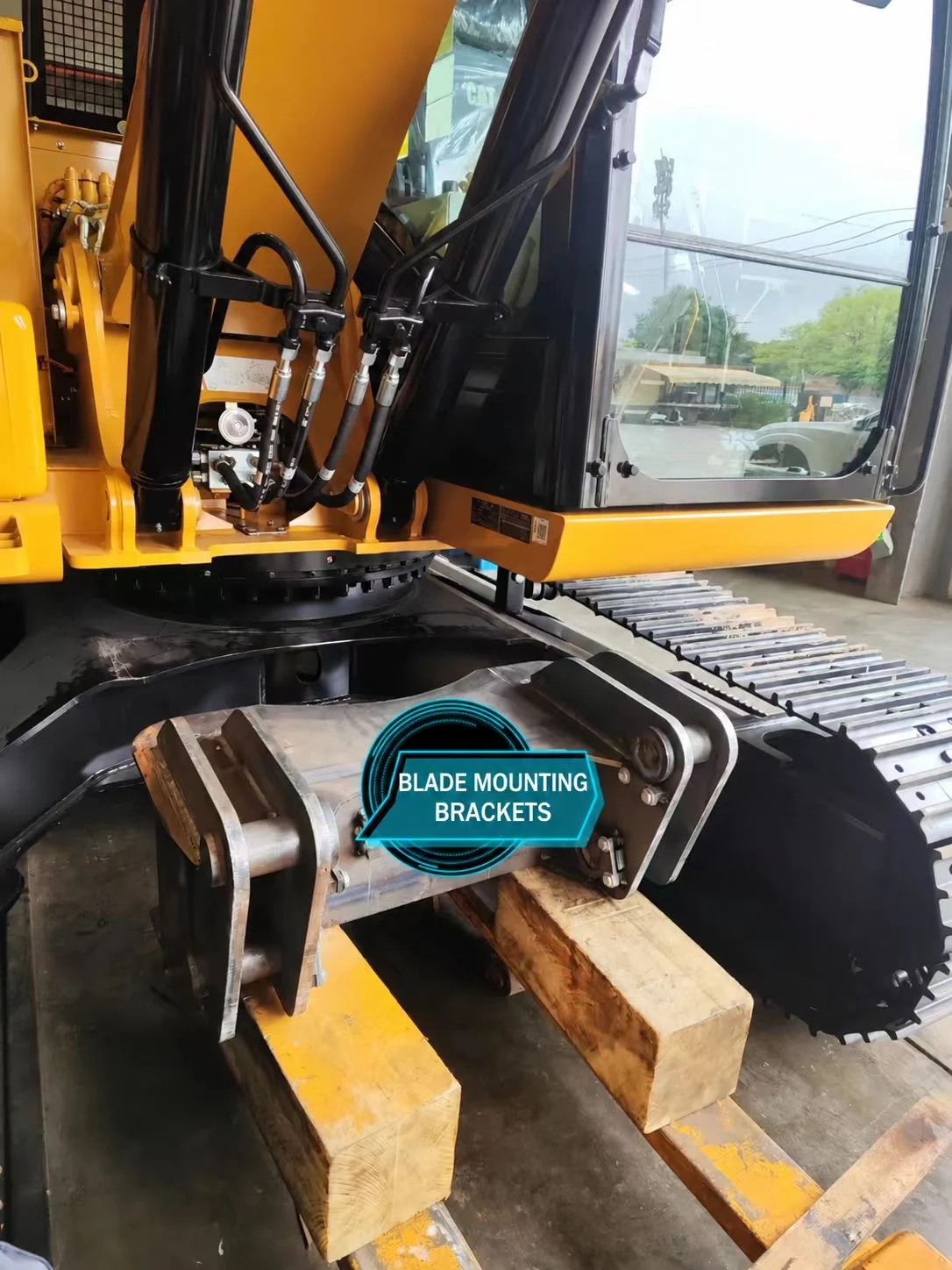
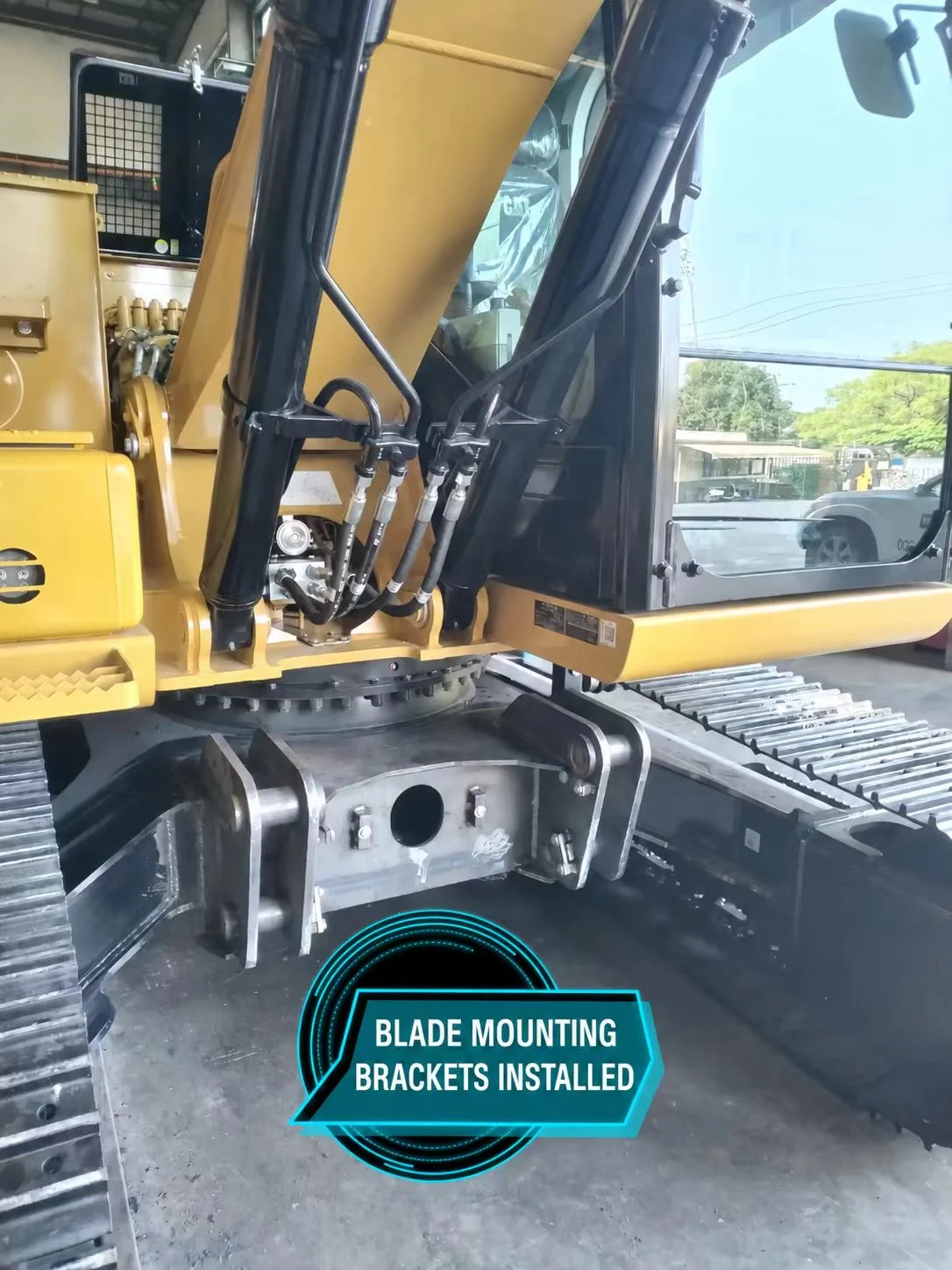
The blade is photographed as a separate assembly before fitting, with two hydraulic cylinders and its pivot structure visible. Other images show the mounting brackets being positioned, welded and fitted to the lower frame.
These stages help answer a practical sourcing question: does the supplier’s scope cover the mounting work as well as the attachment? A quotation should identify the blade, cylinders, brackets, pins and installation work included. It should also specify the mounting design and inspection requirements for the particular machine.
For a custom excavator blade, width alone is not enough. The proposal should address ground clearance, travel clearance, attachment movement and how the assembled machine will be transported. These points should be settled alongside the buyer’s task requirements.
Hydraulic Integration: Center Swivel Joint, Valve Block and Hoses
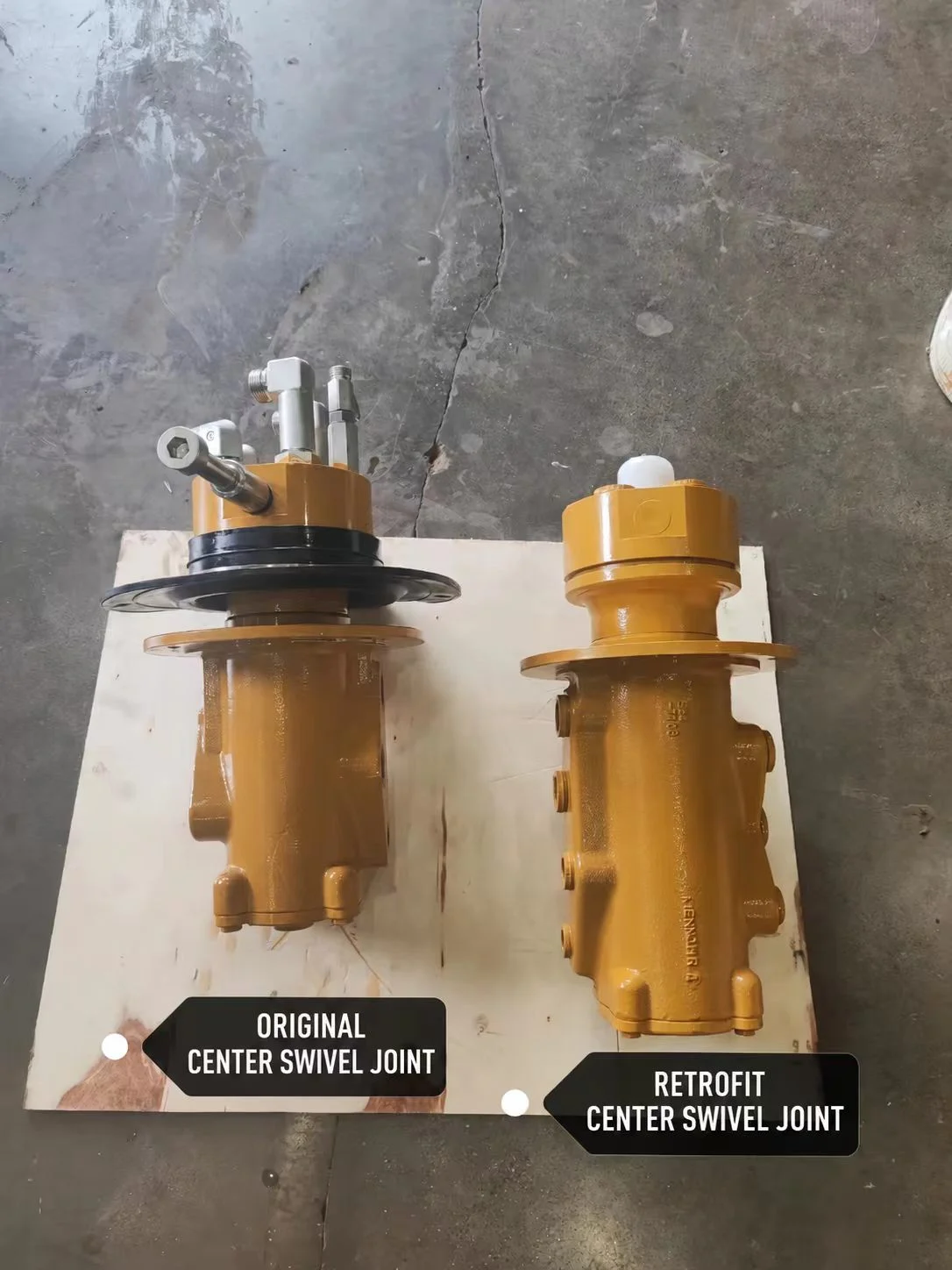
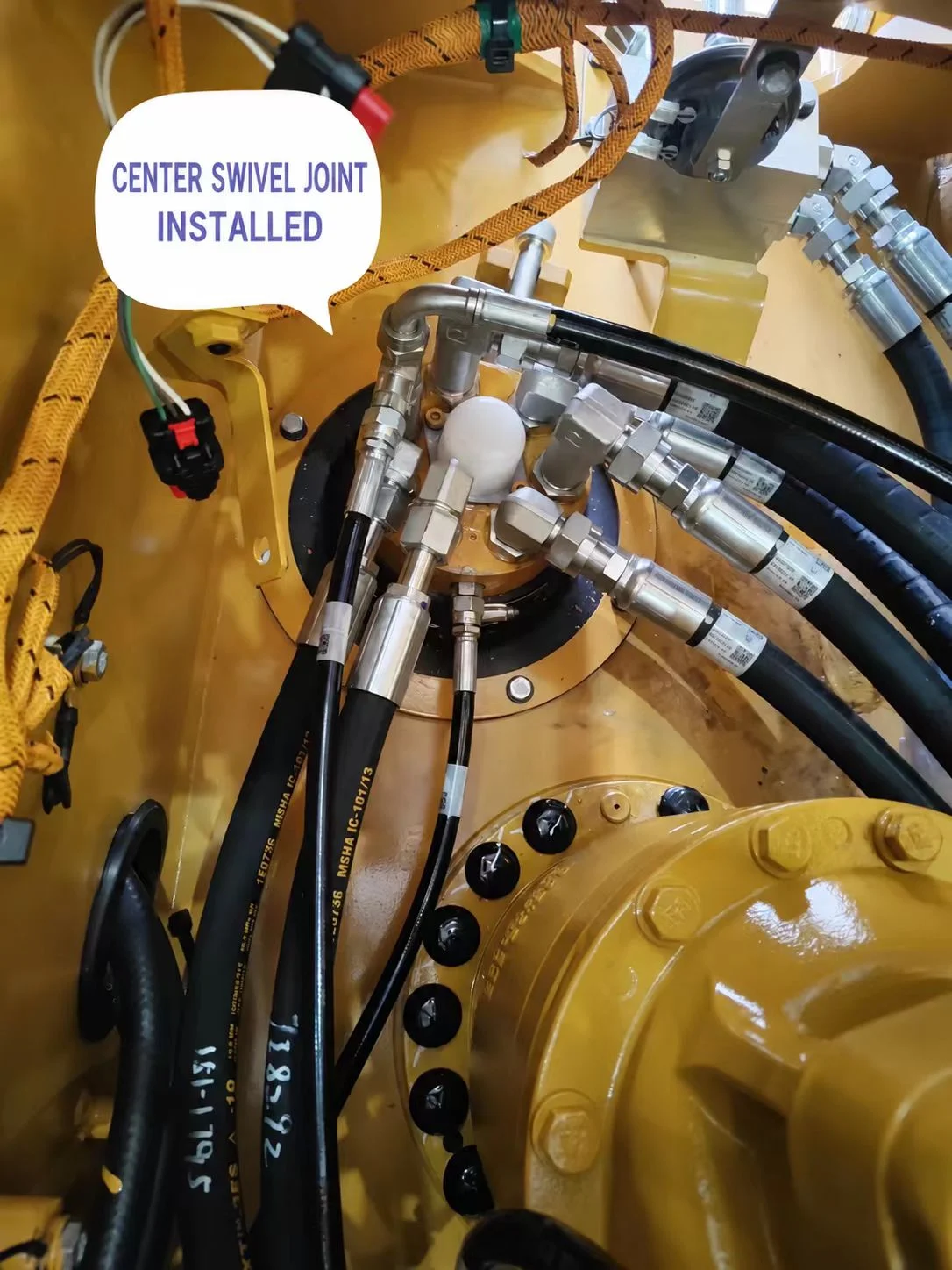
An excavator blade mounted on the lower frame requires a hydraulic arrangement appropriate to that location. This record includes a side-by-side comparison labelled as the original and retrofit center swivel joints, followed by replacement-stage and installed-connection photographs.
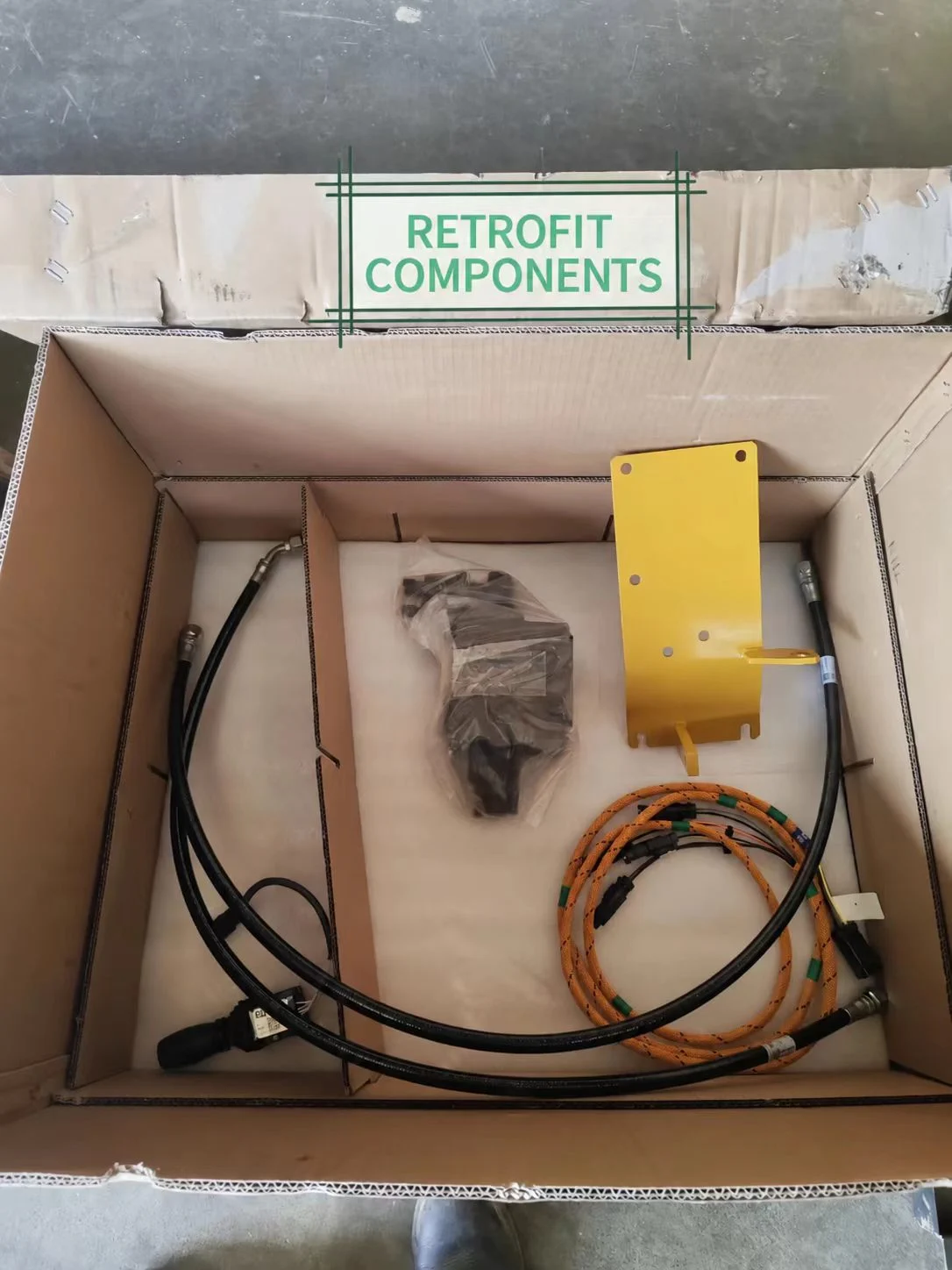
The record also shows a blade control valve block before and after fitting. Taken together, these views demonstrate that the scope extends to hydraulic components and routing, beyond fabrication of the blade itself.
When requesting a similar service, ask the supplier to identify which components will be retained, added or replaced. The agreed specification should cover hydraulic requirements, component compatibility, hose routing and the checks used at handover. Caterpillar’s attachment-selection guidance specifically recommends matching hydraulic flow and pressure to the tool and the machine.
Operator Controls: Wiring, Cab Lever and Attachment Configuration
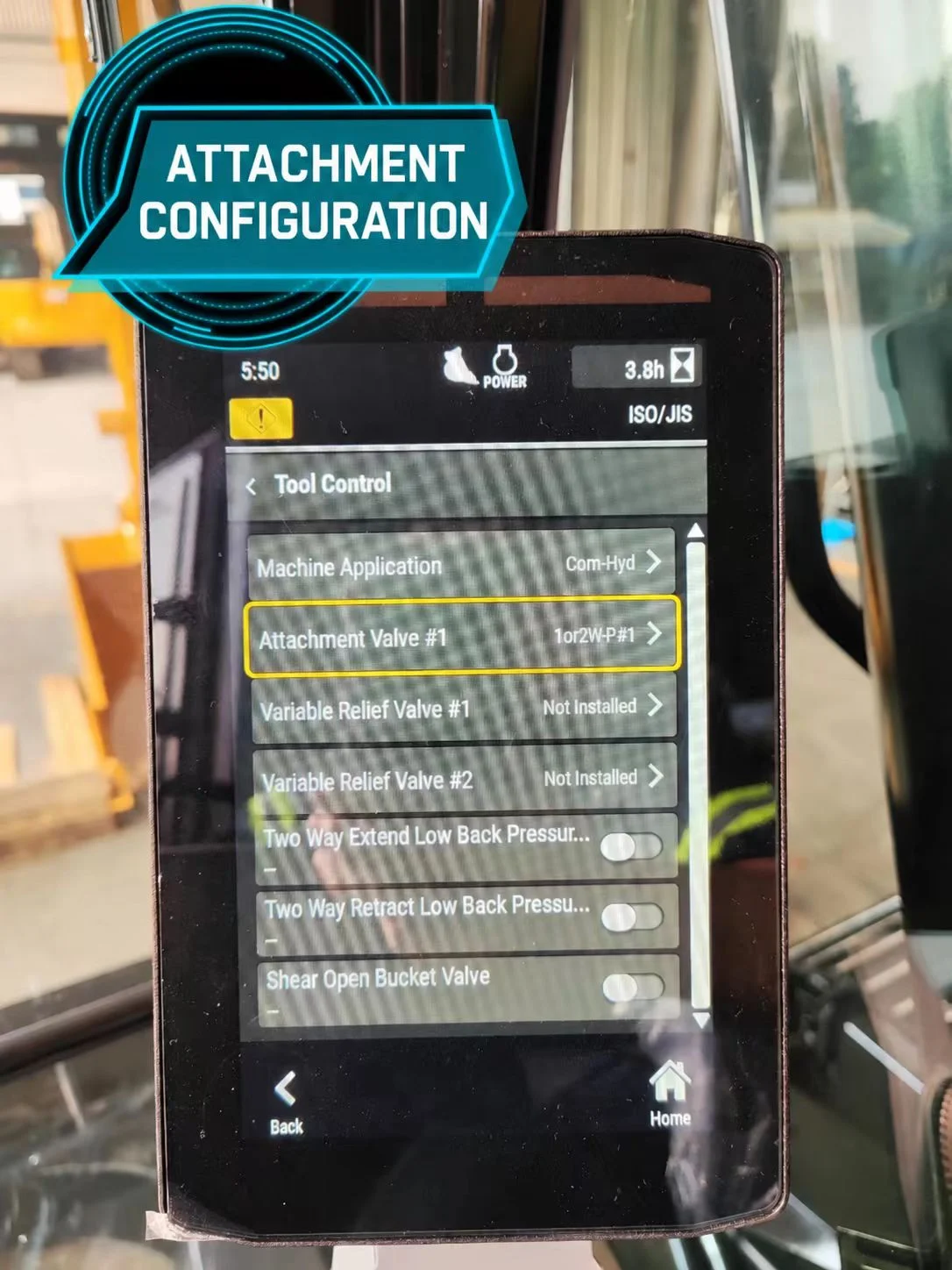
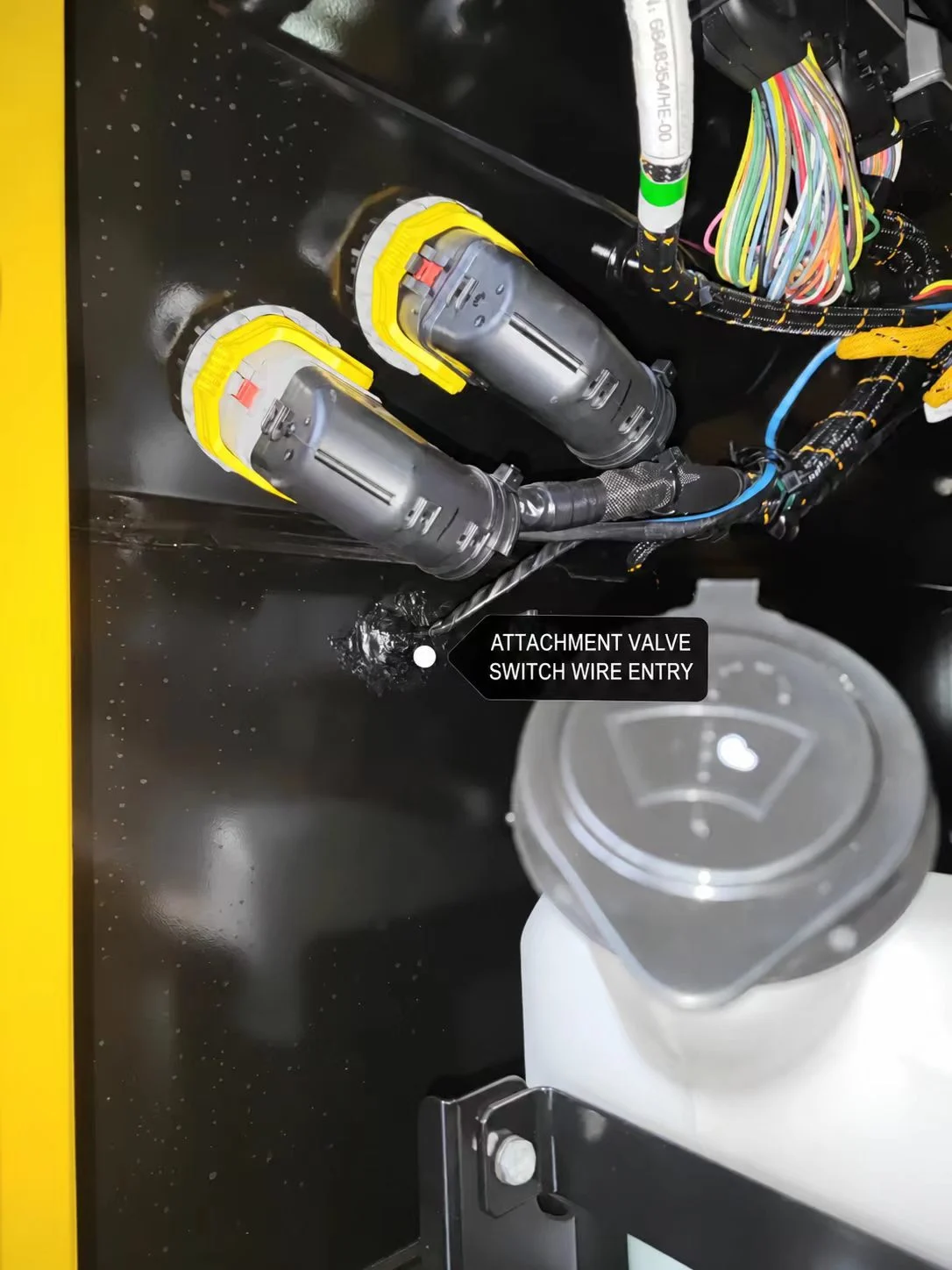
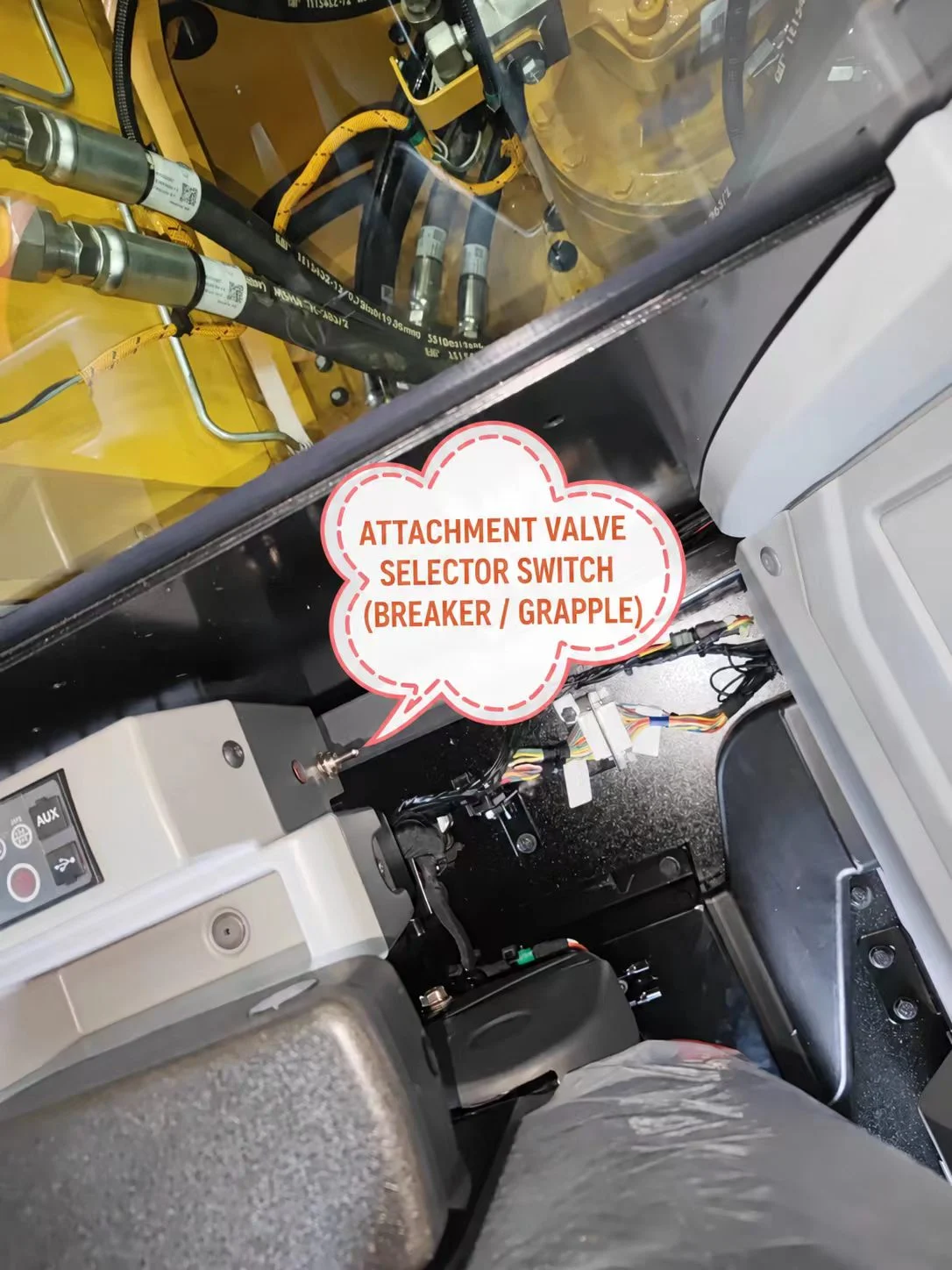
The cab is another part of the customization. The photographs show a three-wire control harness, valve-solenoid connections, a wire-entry detail and installation of a blade control lever. A monitor image documents the Tool Control configuration screen.
A separate image is labelled as attachment-valve selector work for breaker/grapple modes. Buyers who plan to retain other hydraulic attachments should raise that requirement at the quotation stage so the proposed control arrangement can be assessed as a whole.
The screen photograph is a configuration record. It does not, by itself, verify hydraulic output or successful operation of every attachment mode. A complete handover should demonstrate the agreed blade functions and any other functions included in the order.
Finishing and Preparation Before Handover
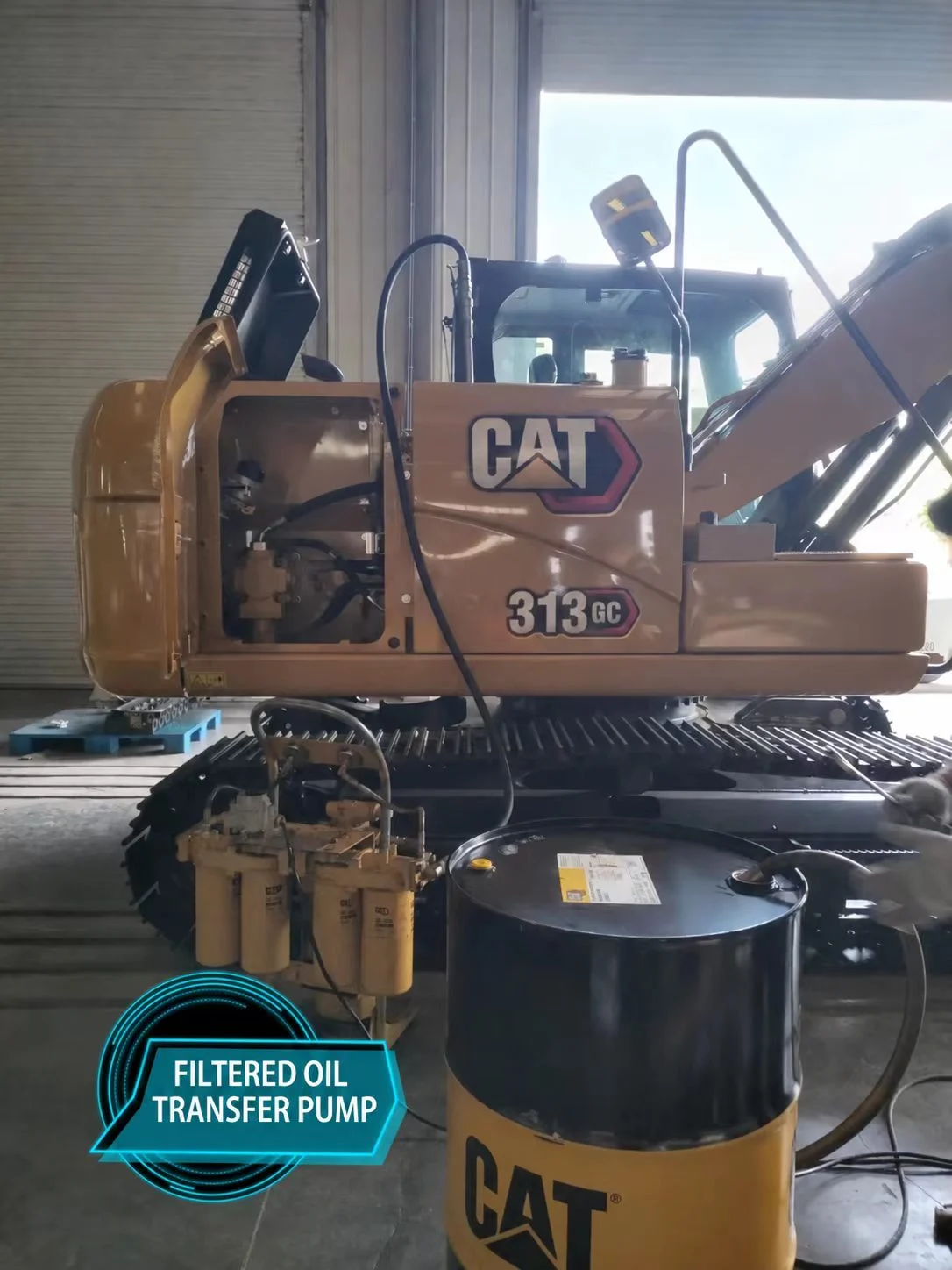
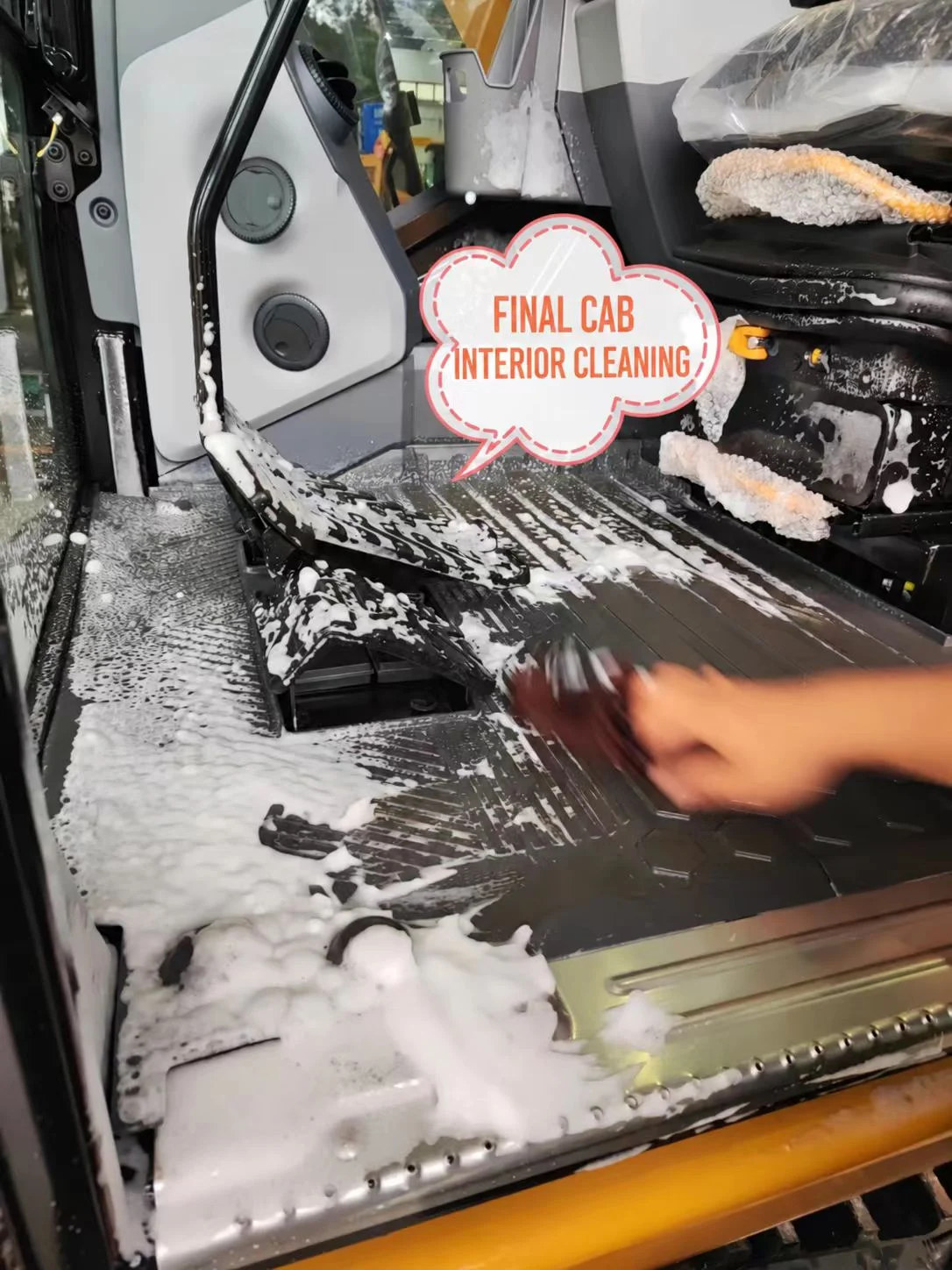
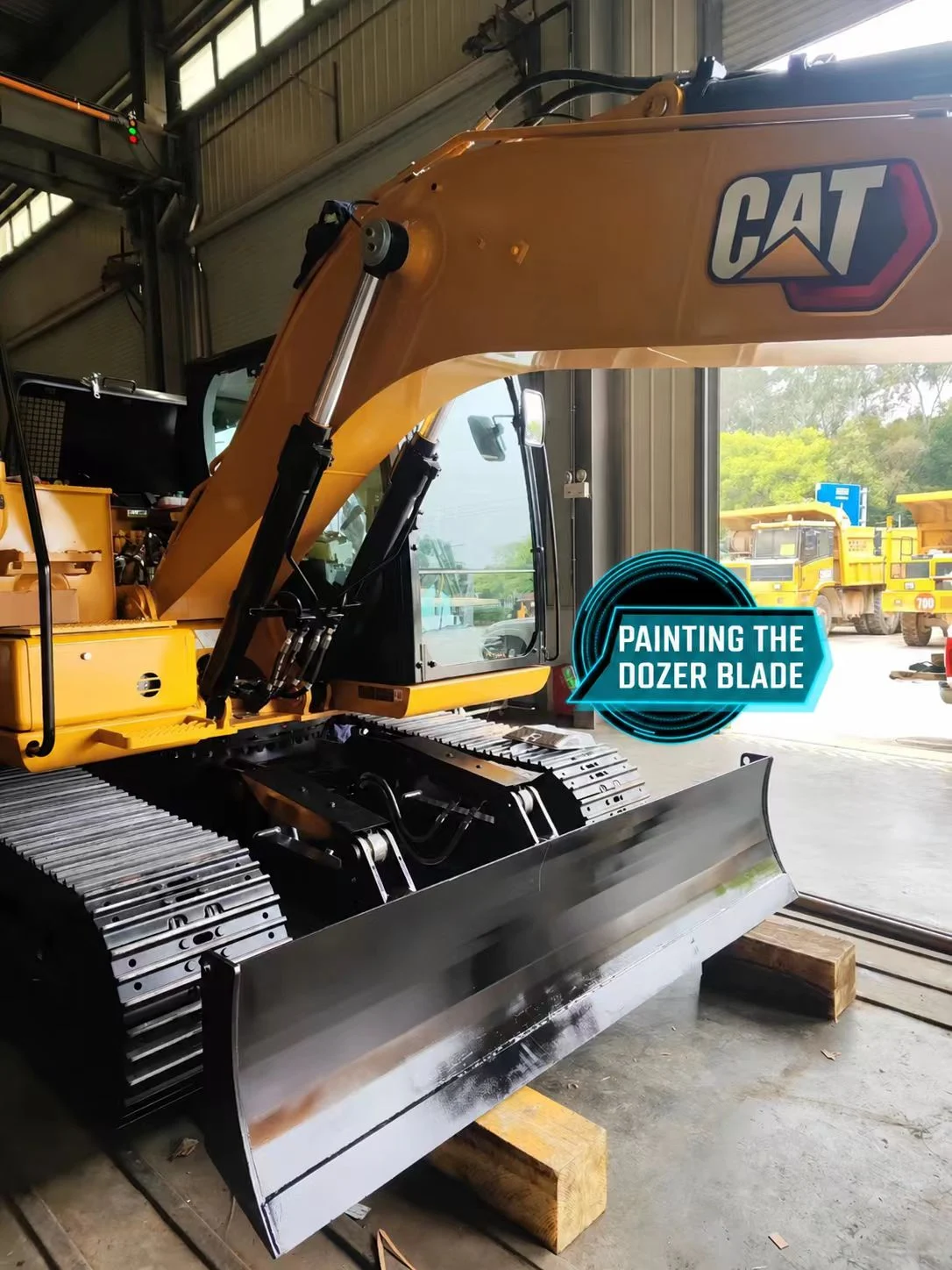
The later photographs show the blade installed, a finishing stage, filtered oil-transfer equipment beside the excavator and cleaning inside the cab. The final workshop view shows the machine with its front blade in place.
This provides a visible record of preparation. Operational acceptance is a separate step: for a purchase or retrofit order, agree how blade movement, hose clearance, leakage checks and control response will be demonstrated. Obtain any required measurements and test records for the exact delivered configuration.
What Determines Excavator Dozer Blade Retrofit Cost?
A useful retrofit quotation should explain the work included rather than provide a price for an undefined blade kit. Cost can vary with the blade specification, mounting fabrication, hydraulic components, cab controls, installation labour and agreed inspection scope.
For this photographed case, a verified price and completion time have not been supplied. For your own project, request an itemized proposal covering:
- Blade dimensions, cylinders, mounting components and added weight.
- Hydraulic parts, hoses, valves and any center-swivel changes.
- Wiring, operator controls and configuration work.
- Installation, finishing and the agreed acceptance checks.
- Parts documentation, warranty terms and after-sales responsibilities.
- Updated transport dimensions, shipment weight and delivery scope.
If the machine will be exported after modification, ask for the shipping configuration to be assessed after the attachment is installed.
What This Case Shows About Our Customization Service
This CAT 313 GC project shows the range of work that a customer-specific excavator request can involve: attachment preparation, structural fitting, hydraulic integration, electrical connections, operator controls and workshop finishing.
At Global Machine Trader, a request for customization starts with the machine and the job you need it to perform. Share the current configuration and intended use so we can assess a suitable scope and prepare a project-specific proposal. The photographed case can help you identify the details to discuss; availability and specifications for another machine require their own assessment.
Frequently Asked Questions
Can I buy or request a CAT 313 GC with a dozer blade?
You can request a machine with the blade configuration your project needs. This case shows one retrofit example; availability and compatibility must be checked for the exact unit.
Is a blade retrofit only a welding job?
The documented project also involves a center swivel joint, hydraulic valve block, hoses, wiring, a cab control lever and attachment configuration. The required scope depends on the machine’s existing equipment.
Can existing breaker or grapple functions be retained?
Include those functions in your requirements. The photographs show selector-related work, but a proposal and acceptance demonstration should confirm the functions supplied for your particular order.
Does this case establish OEM approval for the retrofit?
The photographs document workshop work. They do not establish manufacturer approval or certification; request any approval, parts-origin or warranty documentation needed for the order.
How long does a CAT 313 GC blade retrofit take?
A verified duration is not available for this case. Request a schedule after the machine, component availability and installation scope have been assessed.
Discuss Your Excavator Customization Requirements
Looking for a CAT 313 GC dozer blade installation or another excavator attachment modification? Contact Global Machine Trader with your machine model, serial number, current photographs and intended application.
Include the blade dimensions you need, existing hydraulic attachments, destination and preferred delivery date. We can then discuss the installation scope, required evidence and a quotation based on your machine and project.
Sources and Project Evidence
- Primary case evidence: 23 workshop photographs supplied for this article. Visible markings identify the machine as a CAT 313 GC.
- Caterpillar: field-installed hydraulic kits and configuration matching.
- Caterpillar: choosing excavator attachments.
- Caterpillar: current 313 GC model and equipment options.
The manufacturer references explain general model and attachment principles. They do not certify the photographed retrofit or replace the project’s drawings, component specifications and acceptance records.
Sources and references
- Project evidence: 23 workshop photographs supplied for this case, including a machine marked CAT 313 GC, blade mounting, hydraulic components, wiring and cab controls.
- Caterpillar: Field-installed hydraulic kits and configuration matching — https://www.cat.com/en_US/articles/for-owners/cat-hydraulic-kits-for-excavators.html
- Caterpillar: Five tips for choosing excavator attachments — https://www.cat.com/en_US/articles/ci-articles/five-tips-for-choosing-excavator-attachments.html
- Caterpillar: Current 313 GC model and equipment options — https://www.cat.com/en_US/products/new/equipment/excavators/small-excavators/126640.html
Verify before purchase
Request evidence for the exact machine
Send the model, destination and inspection items you need. We will confirm availability before quotation.
Ask an inspection question